Good systems begin with good information.

LANDOTECH approaches projects as a lifecycle rather than a sequence of equipment purchases.

Requirements, design, coordination, installation, commissioning, documentation, and support all influence the quality of the final system.

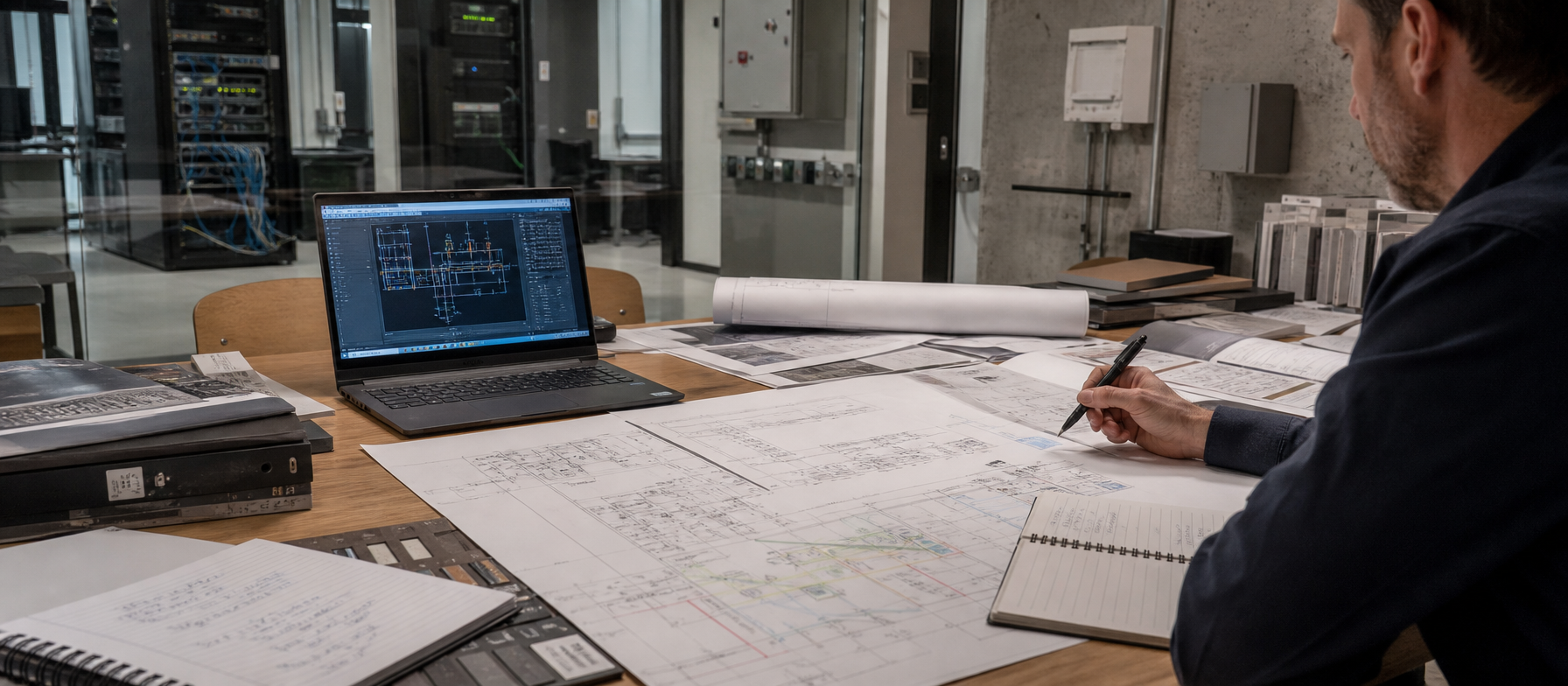
Illustrative commercial project planning and technical coordination scene

Understand the requirement before selecting the product.

The project begins with the environment, stakeholders, operational needs, infrastructure, constraints, schedule, and expected lifecycle.

Technology selections should follow those requirements rather than define them.
Resolve the system before it reaches the field.

System architecture, equipment requirements, network dependencies, rack design, signal paths, physical interfaces, access, power, cooling, and documentation should be developed before installation wherever practical.

Good engineering reduces field improvisation.

Technology is part of the construction project.

LANDOTECH coordinates with architects, engineers, general contractors, construction managers, IT teams, designers, and specialty trades to align technology with the larger project.

Early coordination helps reduce conflicts, preserve design intent, and prevent unnecessary compromise during construction.

Built to remain serviceable.

Installation quality affects every future interaction with a system.

Physical organization, labeling, rack layout, cable management, access, cooling, and consistency should support both immediate operation and future service.

Behavior is part of the system design.

Control logic, configuration, network settings, interfaces, and system behavior should reflect how the environment is intended to operate.

Complexity may exist underneath. The operating experience should remain clear.

Verify the system before calling it complete.

Commissioning confirms that equipment, communication paths, configurations, interfaces, control logic, and system behavior operate as intended.

The process should create useful records, not simply confirm that the system turned on.

Documentation is part of the delivered system.

A system cannot be managed intelligently if basic information about it disappears after construction.

LANDOTECH places a high value on documentation that accurately describes what exists and how it is organized.

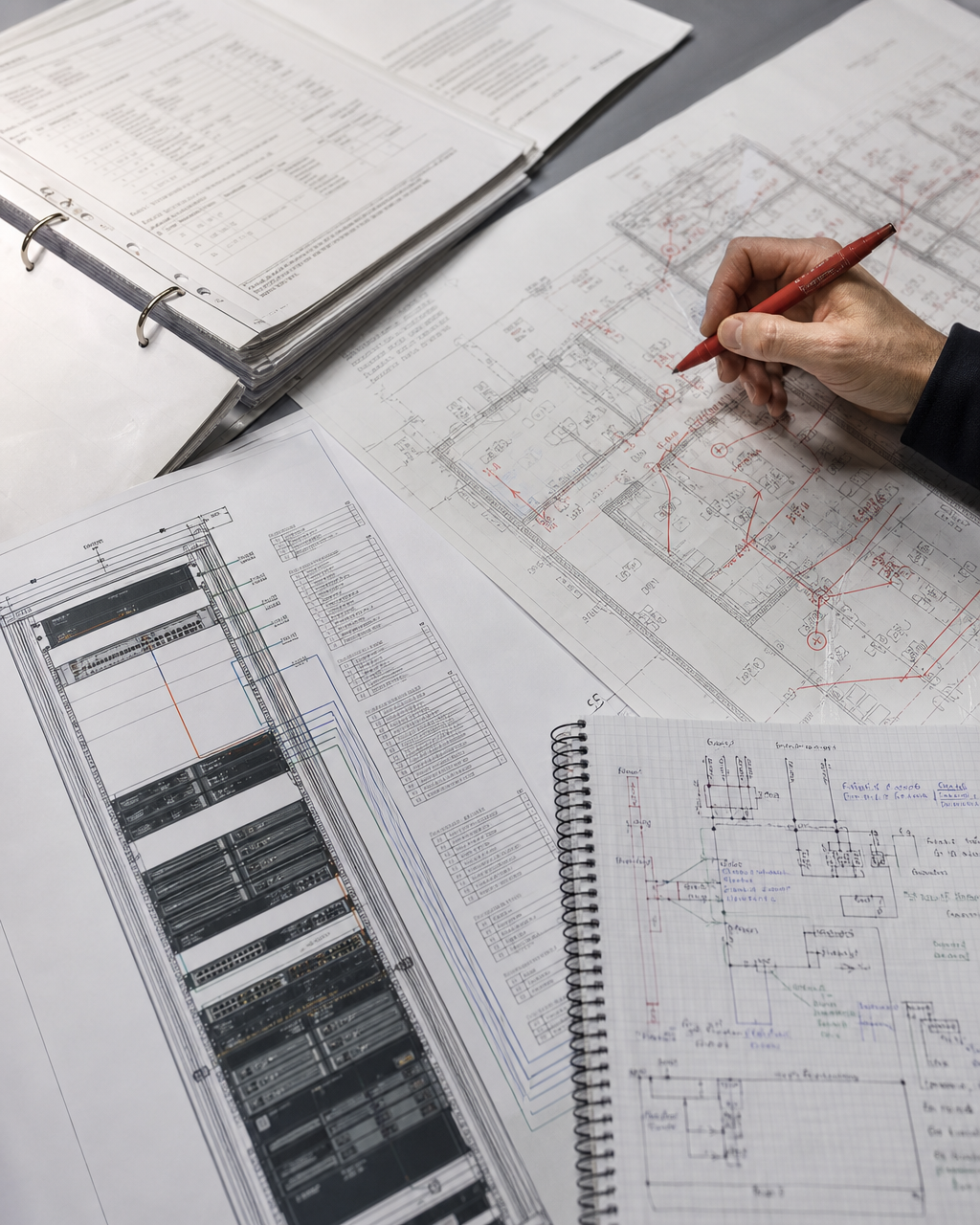
Depending on project scope, that may include system diagrams, network topology, rack elevations, equipment schedules, addressing information, configuration records, signal flow, inventories, interfaces, commissioning records, and revision history.

Useful documentation preserves knowledge.

Illustrative technical documentation and engineering drawing detail

Support improves when system state is visible.

Remote access, monitoring, diagnostics, configuration information, and historical records can reduce the amount of time required to understand a problem before solving it.

Over time, LANDOTECH intends to extend this philosophy through deeper automated data acquisition, system-state visibility, analysis, and operational insight.

The objective remains the same: make complex systems easier to understand, operate, and support.

Planning a commercial technology project?

Bring LANDOTECH into the conversation early.

Discuss a Project